Thursday, July 05, 2012

Apple Preps for New Tablet

Apple Inc.'s AAPL +1.15% component suppliers in Asia are preparing for mass production in September of a tablet computer with a smaller screen than the iPad, people familiar with the situation said, suggesting a launch for the device is near.

Two of the people said that the tablet's screen will likely be smaller than eight inches. The iPad's screen measures 9.7 inches, unchanged since the first model was released in 2010.

Officials at the component suppliers, who declined to be named, said this week that Apple has told them to prepare for mass production of the smaller tablet. The Wall Street Journal reported in February that Apple was testing such a device but hadn't yet decided whether to proceed with production.

One person said the screen makers Apple is working with include LG Display Co. LPL +4.44% of South Korea and Taiwan-based AU Optronics Co. AUO +1.24%

An Apple spokeswoman in California declined to comment.

Analysts said a smaller tablet could help Cupertino, Calif.-based Apple maintain its dominance in a market that keeps getting more crowded. Competitors include Samsung Electronics Co. 005930.SE +1.36% and Amazon.com Inc., AMZN +0.09% while Microsoft Corp. MSFT +0.65% and Google Inc. GOOG +1.27% recently unveiled tablet devices.

Last year, the iPad held a 62% share of the world-wide tablet market, according to market research firm IHS iSuppli, which expects overall tablet sales this year to surge 85% to 126.6 million units..

As the market continues to expand, consumers' choices—in size, technical specifications and price—are growing more varied. Last week, Google started taking orders for the Nexus 7, a tablet device with a seven-inch screen that will sell for $199. That matches the price of Amazon's Kindle Fire, which came out last year and also has a seven-inch screen.

Microsoft's Surface tablet, expected to debut this fall, has a 10.6-inch display, larger than the iPad. Microsoft's Windows Chief Steve Sinofsky said that it will be "priced like comparable tablets."

Friday, June 29, 2012

Google tablet 'Nexus 7'

Google announced its first tablet computer this week. Significantly undercutting Apple's pounds 499 iPad, the pounds 159 "Nexus 7" aims to popularise these new devices in the same way that Amazon's Kindle made e-readers mass-market. But the company's ambition is wider than that - it sees inexpensive computers running the living room and the lives of millions of users. And it wants to be the company that makes the software used on all of them.

The 7in device, which will launch this summer, is not a direct competitor for the iPad, however. It aims to take a different, cheaper route, leaving the very premium end of the market available for manufacturers such as Samsung, who use Google's Android software, to compete with Apple's all-conquering, innovative device. Google has added TV, magazines and movie purchasing to the Play Store, its rival to iTunes, so that it can challenge Apple effectively. Indeed, Google described its new tablet as "built for Google Play".

Underlying the firm's ambitions to dominate the future of computing is Android. This time last year, there were already 100 million devices running Android. Today there are 400 million, with 1 million new ones added each day. That may be 12 per second, but Google knows that not many of those are tablets.

So Google has identified two ways to tackle Apple - the first is to improve how all Android devices run by offering a software upgrade called Jelly Bean for phones and tablets. The aim is that people who use an Android phone will enjoy the experience so much that they will want to complete the "ecosystem" with an Android tablet. Google has tried, under the codename Project Butter, to make the software smoother and, to borrow a word from Apple, consistently "delightful". It's an apparently subtle change that should make a big difference to how people feel their phone or tablet works. The brain, Google points out, can detect a lag of even 10 milliseconds in how a touchscreen works.

The second strand is more conspicuous: a new product called Q (for America only so far) offers media streaming, while elsewhere there are new features for phones and tablets. These improve the way the voice search or the camera works, predict the next word you want to type, or allow you to dictate to your phone.

Other features automate existing features - for example, phones are able to learn when you commute and will automatically suggest a better route or tell you when your next bus leaves. If you've searched the internet for a flight, you can now be kept updated on its status, and if you're travelling Google can make translation more accessible.

All of this points towards Google putting its set of products together in a cleverer way - but they still need the army of software developers that has so far congregated around Apple.

At the San Francisco conference, Google made it clear they know that: "There's never been a better time to be a developer - now you can take an idea and build businesses."

If that convinces people, then Google will be able to do for the mass market what Apple has already done for the elite of iPad and iPhone users.

Google's Nexus 7 tablet feels like the device that might just usurp the Kindle. It does everything that Amazon's device has done so successfully since it launched in 2007, but with Google you can now also watch videos, browse beautifully rendered magazines and the web, and of course check your email.

A Kindle costs from just pounds 89, but those extra functions are likely to persuade a huge number of people to part with pounds 159.

Indeed, it's the design of the product that makes Google's mass-market ambitions clear. Just as the iPad is not worried by Kindle sales, so it is unlikely to be worried by the Nexus 7. This is a device that feels coolly utilitarian, rather than luxurious.

But Google is not the web search engine for a minority of users; it has always aimed to be ubiquitous. And with Nexus 7, it wants to make the ubiquitous tablet. The 7in screen does everything it needs to with a resolution of 1280px x 700px, and at 340g it weighs enough to feel substantial without being burdensome.

There are nudges toward the future, however: press the button to get to a standard Google search page and, rather than a blank screen you get details about flights or films you've recently searched for. That ties web search in with everyday life, and it makes the web increasingly central to a wider range of functions.

Tuesday, June 26, 2012

GDSX Launches New Technology for Travel Management

Travel technology provider GDSX, Ltd. reports the introduction of TripLink, a first of a kind product to capture travel data and managing real-time customer-service processes for trips purchased outside of a corporation’s standard booking channels.

The GDSX solution enables Travel Management Companies (TMCs) and Corporate Travel Departments to actively support the traveler during a trip with itinerary changes and on-the-road problems. It will ensure the integrity of a corporation's duty-of-care programs to locate travelers in case of emergency, GDSX says.
"We seek to strengthen and expand the current managed-travel model for Corporate Travel Departments, TMCs and Global Distribution Systems (GDSs). By bringing rail, hotel, limo and other data into the managed-travel model, with its efficient workflows and automated Quality Controls, the entire trip process can be managed in support of the traveler and employer," stated GDSX Chief Executive Officer Cindy Allen.

"We want to distance GDSX, and the TripLink solution and our customers from the controversy over travel distribution. It is not about an agenda of any kind on any front, but rather an effort to deliver a solution intended to protect our industry’s key stakeholders -, the managed travel community, - in this time of change, innovation and evolution, " Allen said.

Corporate Travel Manager and GDSX customer, Jennifer Steinke of US Foods said corporate buyers and TMC’s need the flexibility to manage bookings for travelers regardless of where they originate. TripLink can import those bookings and put them into formats that can be managed and reported together with other reservations.

TripLink can also import data that hasn’t been collected, combined, and managed in the past, GDSX says. New data will allow TMC‘s to look not just at travel spending - and compare booked vs. actual spending - but also to analyze spending by trips and by destinations. Armed with that knowledge, TMC’s can project future travel costs more accurately.  

Wednesday, June 13, 2012

Microsoft Tries to Promote Windows 8 Without Hurting Windows 7 Sales

With Windows 8's commercial availability expected before the end of this year, Microsoft finds itself in the tricky position of generating enthusiasm for it without affecting Windows 7 sales.

The difficulty in striking this delicate balance became evident on Tuesday, when Microsoft officials spent the day at TechEd North America promoting Windows 8 in speeches, press conferences and demo sessions, while telling the 10,000 IT pros in attendance that their organizations, if they haven't done so already, should upgrade from Windows XP to Windows 7.

But at the morning keynote, when Microsoft officials made an aggressive case for enterprise adoption of Windows 8, they portrayed Windows 7 as an aging OS designed before key changes in computing happened in recent years.

"Windows 8 is a bold new bet, and it's a generational change in Windows," said Antoine Leblond, corporate vice president of Windows Web Services. "Windows 8 first and foremost is a better Windows than Windows 7."

Leblond said Windows 7 is the last in a line of OSes that began with Windows 95, designed primarily for desktop PCs that are always connected to a power source and act as the main repository for users' applications, data and content.

On the other hand, Windows 8 is designed for the world's shift to mobile devices that run on batteries and to applications and content that live dispersed in a variety of web sites and must be constantly available.

Asked to comment about the way Windows 7 was portrayed in the morning keynote, Erwin Visser, senior director of the Windows Commercial Business Group, said at a press conference later in the day that Microsoft in no way wants enterprise customers to interrupt migrations to Windows 7 from Windows XP.

"In our conversations with enterprises, we don't want to discourage their deployments of Windows 7," he said.

Microsoft will end support for Windows XP in 2014, so migrating to Windows 7 now is the right thing to do, he said, adding that Windows 8 will co-exist side-by-side with Windows 7 in an organization.

Windows 8 has a new user interface called Metro, which is designed for touch-screen devices, like tablets, but which can also be used with keyboards and mice. The OS will also have a traditional Windows 7-like interface. The Metro interface, whose design and user experience are markedly different from the traditional Windows interface, has been the source of much criticism among beta testers and industry observers, who say it's inconvenient to use with a mouse, and find its overall navigation functionality confusing.

Windows 8 computers based on x86 chips from Intel and AMD will run Windows 7 applications, and will co-exist with Windows 7 machines on enterprise environments, Visser said.

"The investments [enterprise customers] are making today on Windows 7 from a hardware infrastructure and also in application compatibility carry forward into Windows 8," Visser said.

At the same time, Microsoft is "very proud and bullish" about the value of Windows 8 for enterprises, so it expects to see customers upgrade to it from Windows 7, he said.

Monday, June 04, 2012

Sony dips below 1,000 yen for 1st time since 1980

Sony's stock price fell below 1,000 yen Monday for the first time since 1980 as global markets slide but also a symptom of its decline since huge success with the Walkman three decades ago. Battered by competition from Apple Inc. and Samsung Electronics Co., Sony has lost money for four
straight years — and for eight years in its core television business.A strong yen, which erodes overseas income, and natural disasters at home and in Thailand, a key manufacturing hub, have added to its woes.

Sony's shares dipped to 990 yen before recovering slightly in trading Monday on the Tokyo Stock Exchange. The Nikkei 225 stock average was down 2 percent after U.S. hiring slowed sharply in May.The company said it was first time that its stock price had traded below 1,000 yen since August 1980 — the year after it introduced the iconic Walkman portable cassette player to the world in 1979.

The stock had peaked at 16,950 yen in March 2000.Sony, whose businesses run from digital cameras and personal computers to PlayStation game consoles and movies such as "Bad Teacher," last month reported a record annual loss of 457 billion yen ($5.7 billion) for the year through March 2012.

The company is aiming for a comeback under Kazuo Hirai, appointed president earlier this year, who has headed the gaming division and built his career in the U.S. Sony forecast a return to profit for the fiscal year through March 2013 at 30 billion yen ($375 million), banking on the growing smartphone and tablet businesses.

Sony also plans to cut 10,000 jobs, or about 6 percent of its global work force.Widely admired in the 1980s as an innovative power, Sony fell behind when digital music players and flat TVs became hits. Its gadgets have lost popularity as consumers flock to products from Apple such as the iPhone and iPod.

It's also lost out in the TV market to South Korea's Samsung and other Asian competitors. Despite losses in that division, Hirai remains committed to TVs, and promised to cut costs to turn a profit in the division in the next two years.Sony also plans to seek new growth in emerging markets such as India and Mexico.In 2010, Sony stopped Japanese production of its Walkman, which sold 220 million units worldwide.

Tuesday, May 22, 2012

Korea Unveils New Bullet Train

The Korea Railroad Research Institute on Thursday unveiled a next-generation bullet train with a maximum speed of 430 km/h, the HEMU 430X. The HEMU on a test run covered a 28.2 km distance at a speed of 150 km/h from a station in Changwon, South Gyeongsang Province.

The train was developed by the institute in collaboration with the Ministry of Land, Transport and Maritime Affairs, Hyundai Rotem and other companies since 2007 at a cost of W93.1 billion (US$1=W1,164). Last October, a test run reached a speed of 428.9 km/h.HEMU stands for Highspeed Electric Multiple Unit, but the acronym also means "auspicious sea fog" in Korean.

It will be the fourth fastest high-speed train in the world, after France (575 km/h), China (486 km/h) and Japan (443 km/h). It can travel from Seoul to Busan in 90 minutes. The global competition had been sluggish since Germany broke the 400 km/h mark in 1988 and Japan in 1996, but it was reignited when a French train exceeded 500 km/h in 2007. China unveiled a bullet train that manages 486 km/h in December 2010 and developed a prototype reaching a maximum speed of 500 km/h a year later.

"We will keep working on increasing the speed and make it possible for a production model to operate at speeds of up to 430km/h around this fall," said Hong Soon-man of the institute. A researcher there said it will be possible to reach a maximum speed of 500 km/h within three years. "The high-speed train market will increase to over W450 trillion," said Dr. Mok Jin-yong at the institute. "Since speed represents the level of technological advancement, we cannot afford to lag behind in the competition."

Sunday, May 13, 2012

A tablet begging to replace your netbook

Product Asus Transformer Pad TF300
Specifications 10.1in LED backlit WXGA 1280x800 touchscreen, Nvidia Tegra 3 quad-core CPU, 1GB of RAM, 16GB or 32GB of internal storage, Bluetooth, WiFi, 1.2MP front camera, 8MP rear camera, 1x 2-in-1 audio jack (headphone/mic-in), 1x microHDMI port, 1x MicroSD card reader, 1x USB 2.0 port, 1x SD card reader, 10 hours battery life or 15 hours with dock, Android 4 Ice Cream Sandwich
Pad only - 263x181x9.9mm, 635g
Dock only - 263x181x10.4mm, 546g
Pad with dock - 263x181x19.4mm, 1,181g
Price £399

IN AN ATTEMPT to offer the combination of a laptop and tablet, thus eliminating the need for both, Asus' Transformer Pad TF300 is a tablet along with a lock-in keyboard dock, begging to replace your aging laptop, notebook or netbook.

However, the combo feature just doesn't work as well as we'd hoped. The dock is not sturdy enough to bear the heavy tablet, resulting in a disappointing and overall fragile feel when put together.


Friday, May 11, 2012

Audi outsells its biggest rival, BMW, in April

(CBS News) The battle between the three biggest luxury car makers has a new champion. Audi, a division of Volkswagen, outsold market leader BMW for the first time in over a year in April. Strong demand from China and the U.S. boosted sales among all automakers, but Audi came out on top, with the strongest performance of the three major German luxury brands.

The company told Reuters that vehicle demand increased 14.4 percent in April to 125,200. Sales of BMW brand models rose 7.4 percent to 121,476.

Munich-based BMW has long been the strongest of the big three luxury brands: BMW, Audi, and Mercedes-Benz. A spokeswoman for Audi said that the last time the company out-sold BMW in a month was January 2011. Audi surpassed Mercedes-Benz in sales last year and hopes to take the lead by the end of the decade. Volkswagen, Audi's parent company, has a goal of doubling car deliveries to 2 million by 2020.

"Audi will remain the No. 1 challenger to BMW over the next four to five years," Frank Schwope, an analyst with NordLB in Hanover, told Reuters. "They're firmly rooted in lucrative markets and benefit greatly from VW resources."

Monday, May 07, 2012

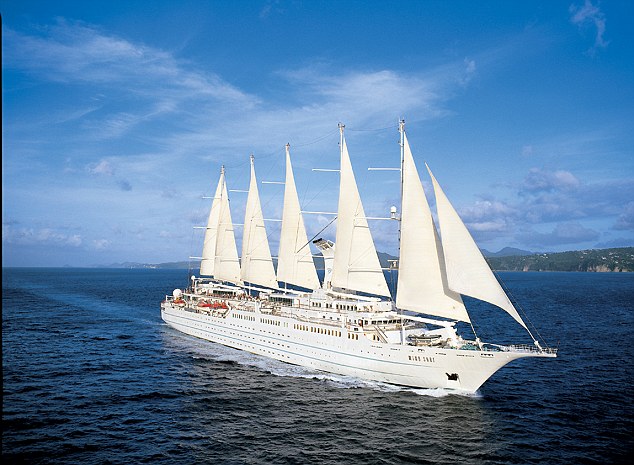
Small and perfectly formed: From sail ships to luxury yachts - how to take a mini-cruise

In an age in which every new cruise liner seems bigger than the last, it's reassuring to find there are some ships that still resemble ocean-going vessels rather than floating hotels.

Perhaps the most romantic are masted sailing yachts, which offer the charms of a relaxed, intimate atmosphere and the ability to moor in small harbors or drop anchor in secluded coves.

And what could be more thrilling than standing on deck looking up at billowing white sails... knowing you are never going to have to climb the rigging yourself? If you prefer - and if you have the budget - you can even experience the luxury of a super-yacht worthy of an oligarch in the Mediterranean.

Here is a variety of suggestions for those who want to sail away from the crowds...

Budding sea dogs might want to sail the Med on Star Clippers' five-masted Royal Clipper, where you can volunteer to help hoist the sails or climb a mast. A four-night cruise from Civitavecchia, the port that serves Rome, takes you to Corsica to moor overnight, Sardinia's Costa Smeralda and finally to Elba, where Napoleon was briefly held captive.

Travel is by Eurostar and sleeper train via Paris. The cost for departure on June 5 is from £1,319 per person.

On the three yachts of Windstar Cruises, there's no need for anyone - crew or passengers - to climb the rigging: the sails are fully automated. The sleek part-yacht, part-cruise ships have a casual dress code and the mood is laid-back luxury.

Wind Star - one of the two smaller vessels, with just 74 cabins - has a six-night cruise from Rome to Barcelona departing on July 15, costing from £2,859pp, including flights. You'll call at Elba, Porto Vecchio in Corsica, Alghero in Sardinia and Palma de Mallorca.

Alternatively, you can head to the Baltic Sea on the magnificent, five-masted Wind Surf, one of the two largest sail cruise ships in the world, on a week's cruise from Oslo to Stockholm leaving July 27.


Thursday, May 03, 2012

Boeing 747-400 Freighter joins Etihad's fleet

Etihad Airways has signed a contract with Atlas Air, Inc. to provide the UAE flag carrier with its first Boeing 747-400 Freighter.
The aircraft, with a payload capacity of 124 tons, will be used by Etihad Cargo to transport fresh produce, machinery and garments on routes to and from Africa, Europe, India and China over the Abu Dhabi hub.  Delivery and commencement of operations are scheduled for June 2012.

Atlas is a leading global provider of outsourced aircraft and aviation operating services and the contract with Etihad Airways is for one aircraft under a multi-year Aircraft, Crew, Maintenance and Insurance (ACMI) agreement.

The delivery will take Etihad Cargo’s fleet to six aircraft.  The airline already operates a Boeing B777F, two Airbus A330-200F, one Airbus A300-600F, and one McDonnell Douglas MD-11F.

Etihad Airways has an additional four freighters scheduled for delivery in 2013 and 2014, two Boeing B777F and two Airbus A330-200F.

James Hogan, Etihad Airways President and Chief Executive Officer, said:  “In Atlas Air, we have found a first-rate partner focused on operational excellence, security and outstanding customer service. We look forward to a rewarding relationship that leverages each of our expertise to grow global trade.”

David Kerr, Etihad Airways Vice President Cargo, added: “We are strongly committed to building our presence in the cargo sector and to serving the growing demand from our customers around the world.  We have the fortune of geography and being able to bridge many of the trade flows from producer to consumer markets.”

“We are delighted to add Etihad Airways to our portfolio of ACMI customers,” said William J. Flynn, President and Chief Executive Officer, Atlas Air Worldwide. “Atlas Air has the largest and most modern fleet in our industry, with a mix of cargo and passenger aircraft, serving customers who are leaders in their markets.

“Etihad Airways takes pride in providing reliable, high-quality service across its expanding international route network. We look forward to welcoming not only a new customer for Atlas Air, but also future opportunities for strategic expansion for both companies.”